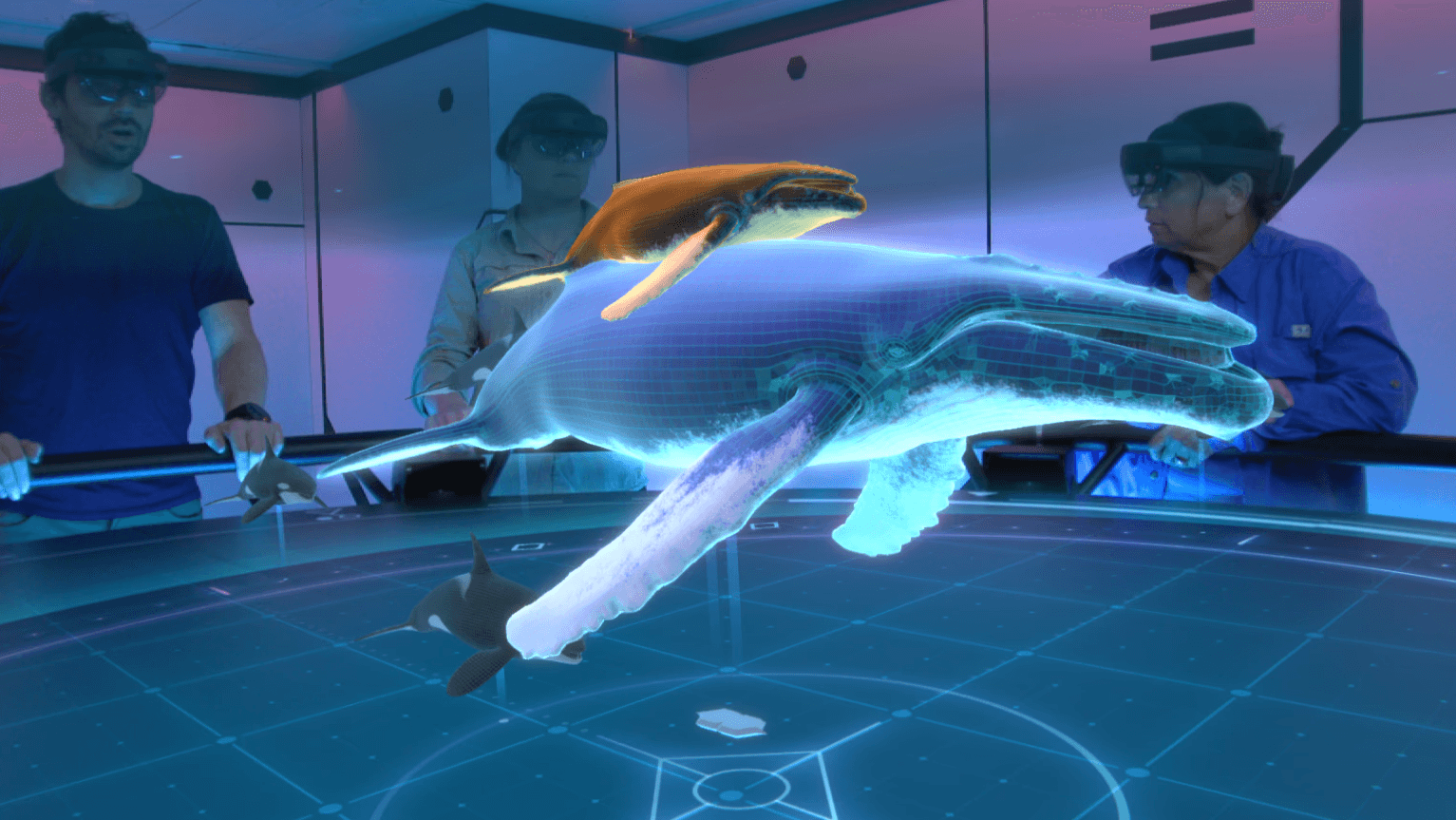
future of work
a spatial productivity platform that transforms work by enhancing ideation and ensuring confident, informed decision-making
00

problem
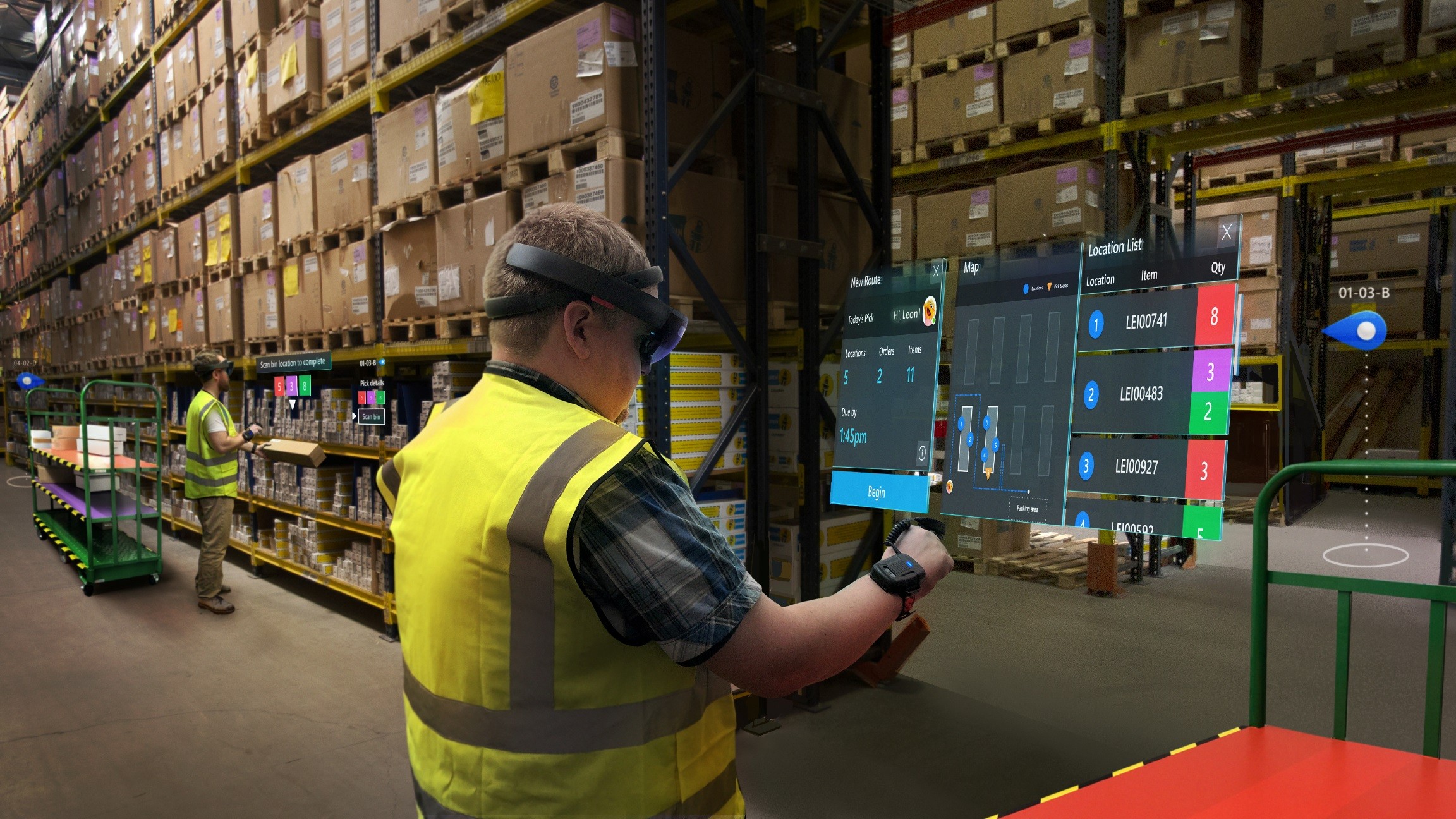
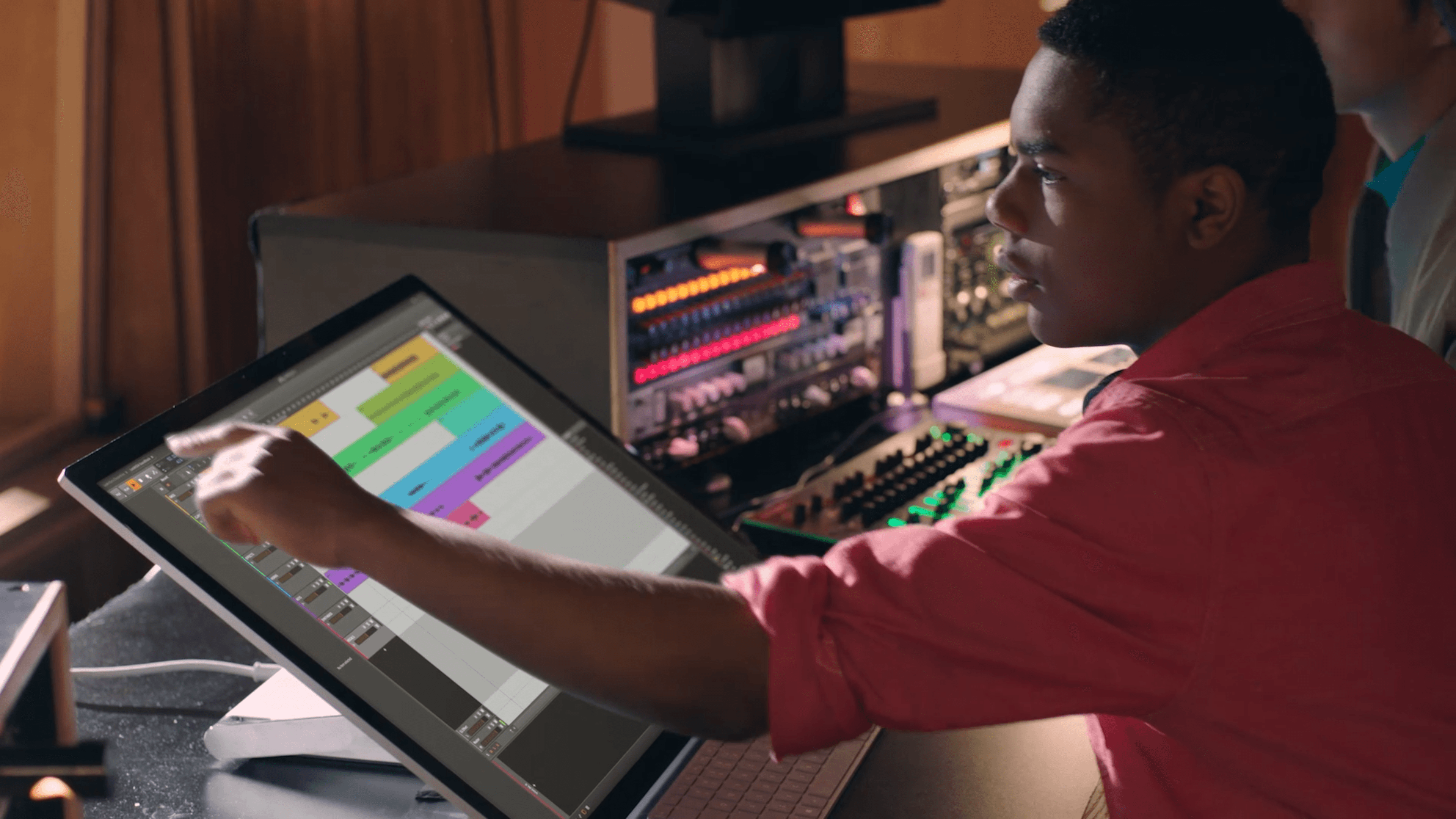
Work has always been constrained by the limits of the screen. Information is scattered across disparate tools, formats, and environments, forcing constant context-switching and creating gaps where insight gets lost. For desk workers, 2D interfaces flatten complex ideas and make collaboration across distance feel thin and asynchronous. For frontline workers, screen dependency pulls attention away from the physical world, introducing risk and inefficiency at the worst possible moments. The deeper problem wasn't a missing feature, it was that the fundamental interaction model for work had never been reimagined for the spatial era.
solution
Starting from first principles, I defined a platform vision for a spatial productivity system designed to transform how both desk and frontline workers operate. At its core was a fully portable personal computing interface, one that travels with you across physical and virtual environments. Workers could gather and ideate in 3D, collaborate through shared spatial presence, and validate decisions at full scale before committing to real-world execution. By grounding the vision in two distinct worker archetypes and their core loops, the design unlocked a coherent, scalable system, one where tools persist across spaces, collaboration is boundless, and insights emerge from the environment itself.
A single artifact that became a shared language
When I joined Metaworks, the teams building this platform weren't lacking talent or ambition. They were lacking a common picture of where they were going. Engineering was deep in capability development. Product was navigating an expanding scope on a singular product, Workrooms. Design was executing in fragments. Everyone was building, but no one was building toward the same future.
I created the Mixed Reality at Work vision to change that. Not as a feature spec or a UX deliverable, but as a strategic framework that could make an abstract platform vision visceral and undeniable. By grounding the future of spatial work in a single human story, told with enough fidelity to feel real, I gave the Metaworks team something they could point to, debate, and ultimately align behind.
It worked. The vision became the connective tissue across the organization, used to orient new teams, pressure-test platform decisions, and eventually steer the broader OS team toward a coherent north star. What started as a design initiative became the lens through which the entire platform was evaluated. That's the kind of leadership I believe design is capable of - not just shaping the experience, but shaping the direction.
Spatial AUI Primitives
At the heart of the platform is the Spatial AUI - your personal computing interface for productivity. A fully portable construct that travels with you across physical and virtual environments. Think of it like a virtual briefcase that houses all your work tools and apps, accessible in any context. The platform is defined by seven core primitives, each addressing a fundamental breakdown in how work gets done today.
These seven primitives aren't features, they're a design language. Each one maps to a fundamental breakdown in how 2D work is done today and proposes a spatial solution grounded in how humans actually navigate, share, and communicate in physical space. Defining the primitives before defining the features is what made this a platform vision rather than a product spec. It's the difference between designing a series of tools and designing the system those tools live in.
Context that compounds
Let's look at these primitives in action through the story of Alice, a robotics engineer at a global manufacturing company, tasked with designing new equipment for the factory floor.

Context compounds when it is persistent, spatial, and networked.
First, Alice puts on the headset and her workspace is exactly where she left it. Every tool, every document, every context she was working in is persistent across sessions.
Second, she pulls up the 3D model of the lift arm she is redesigning directly in her spatial environment and begins working on it at full scale. The design work happens in context, not in a 2D window.
Third, Bob, her industrial engineering lead, calls in and appears as an avatar on her desk. No app switch. No meeting invite. Collaboration surfaces naturally inside the same environment she's already working in.
That's the platform in action.
Validation in context

Now for the moment where the platform really earns its value. Alice and Bob need to validate whether the new arm design will cause a collision on the factory floor. Alice moves from deep desk work to frontline validation seamlessly to complete the task.
Rather than scheduling a site visit or relying on 2D schematics, Alice uses the global factory site map to select a digital twin portal of the specific factory. They teleport in together as avatars, with their work tools intact. Alice places the arm model at full scale in the intended position. The collision is immediately visible - the arm extends beyond its operational limit.
They catch it here, in the digital twin, before a single production order is placed. That's what spatial computing actually unlocks for enterprise work. Not a better interface. A fundamentally different relationship between design and validation.
This narrative became the strategic language for the entire platform organization, helping everyone understand the 'why' behind the technology.
Vision to OS architecture

The Spatial AUI work didn't just define a platform vision. It catalyzed a structural shift in how the OS team thought about Horizon OS itself. The seven-primitive interaction model I defined became the basis for the OS team's four core OS-level pillars - Space, People, Augments, and Navigator. or "SPAN".

Space is the environment itself. Physical and virtual anchors for work and context.
People brings the org graph in as a first-class OS primitive. Presence, identity, collaboration all built in.
Augments are the apps and tools that travel with the user across environments.
Navigator is the system layer that connects all three seamlessly.
Together these four primitives became the backbone of the entire Horizon OS architecture.
year
2023
timeframe
1 year
role
Design Director
company
Meta
01

02

03

04

05